
Hypoallergenic Glasses: Best Frame Materials for Sensitive Skin
Hypoallergenic Glasses: Best Frame Materials
8 min read • Posted on 26 January 2026
If your glasses leave red marks on your nose bridge or make your skin itch behind the ears, you're not imagining it — and it's almost certainly not a fit issue. Materials are the most common cause of glasses-related skin reactions, and they go undiagnosed for months because most people don't think to question what their eyeglasses frames are made of.
This guide covers the frame materials least likely to cause problems, how to tell if you're already reacting, and how to find a pair that works with your skin — not against it.
Here's what we'll cover:
-
What makes a frame truly hypoallergenic
-
The most common materials causing reactions — and why
-
The best hypoallergenic frame materials compared
-
How to recognize an allergic reaction to glasses
-
How to choose the right frame for your skin type
For a broader look at how materials shape your eyewear experience, our eyewear frame materials guide is a useful companion read.
What Makes Glasses Hypoallergenic?
A hypoallergenic frame is one that minimizes the risk of triggering a skin reaction. No material is 100% allergen-free for every person — but some are dramatically less likely to cause problems than others, and understanding why helps you make a better choice the first time.
Three factors determine whether a frame is safe for sensitive skin:
-
The material itself. Natural materials like wood are inherently free of the chemicals that cause most reactions. Plant-based bio-acetate avoids the petroleum-derived plasticizers found in low-grade acetate. Stainless steel doesn't release the nickel ions that trigger the most common metal allergy.
-
The finishing process. Even a hypoallergenic base material can become irritating if it's coated with a harsh varnish or synthetic sealant. The quality of the finish matters as much as the raw material — a poorly sealed wooden frame can still irritate skin.
-
Direct skin contact points. The nose bridge, temples, and pads are where frames touch your skin all day. If those specific components are made from allergenic materials, even an otherwise 'hypoallergenic' frame can cause problems.
Why Your Current Glasses Might Be Irritating Your Skin
If you're searching for hypoallergenic glasses, you've probably already had a bad experience. Here are the most common culprits — and why they're so often missed:
-
Nickel. This is the single biggest cause of contact dermatitis from eyewear. Nickel is found in many metal frames, particularly in nose pads, temple tips, and hinges. Nickel allergy affects roughly 18% of North Americans — and reactions often develop over months of repeated exposure, which is why someone can wear the same glasses for a year before suddenly reacting.
-
Low-grade plastics and acetate. Traditional acetate contains plasticizers and stabilizers that can leach into skin, especially in warm weather when frames soften slightly. The longer you wear them, the more exposure accumulates — for a deeper look at how acetate and metal compare, see our guide to acetate vs metal frames.
-
Synthetic coatings and paints. Many frames are finished with synthetic lacquers that flake or wear over time, exposing the underlying material and creating new contact points on skin.
-
Latex or rubber components. Some nose pads and temple grips contain latex, a well-known allergen that's easy to overlook.
-
Friction and pressure. Even non-allergenic frames can cause irritation if they're poorly fitted. Constant pressure on the same spot creates skin breakdown that's often mistaken for an allergic reaction — a reminder that fit and material both matter.
If replacing nose pads with silicone hypoallergenic alternatives has only partially helped, or if the reaction extends beyond the nose bridge to the temples, the frame material itself is likely the source. Switching materials entirely is the more lasting fix — and this eyeglass frame materials guide from the American Academy of Ophthalmology is a useful starting point for understanding what each material contains.
The Best Hypoallergenic Frame Materials
Not all eyewear materials are equally skin-friendly. Here are the three that consistently perform best for sensitive wearers — and the specific situations where each one makes the most sense.
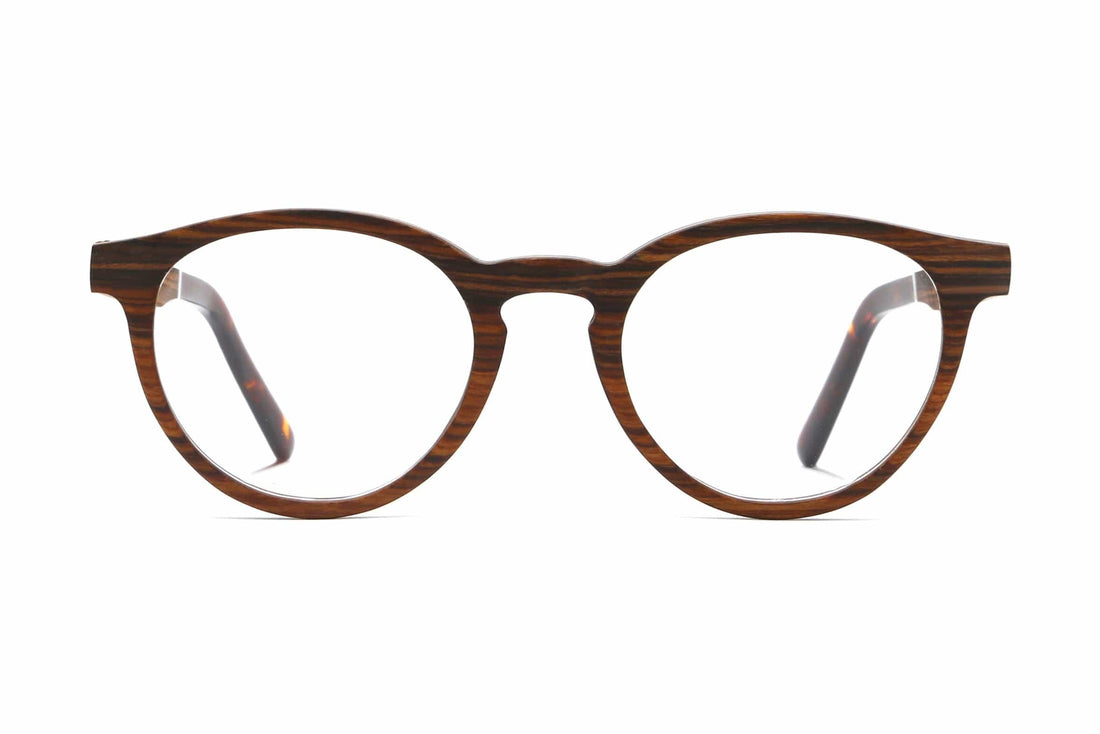
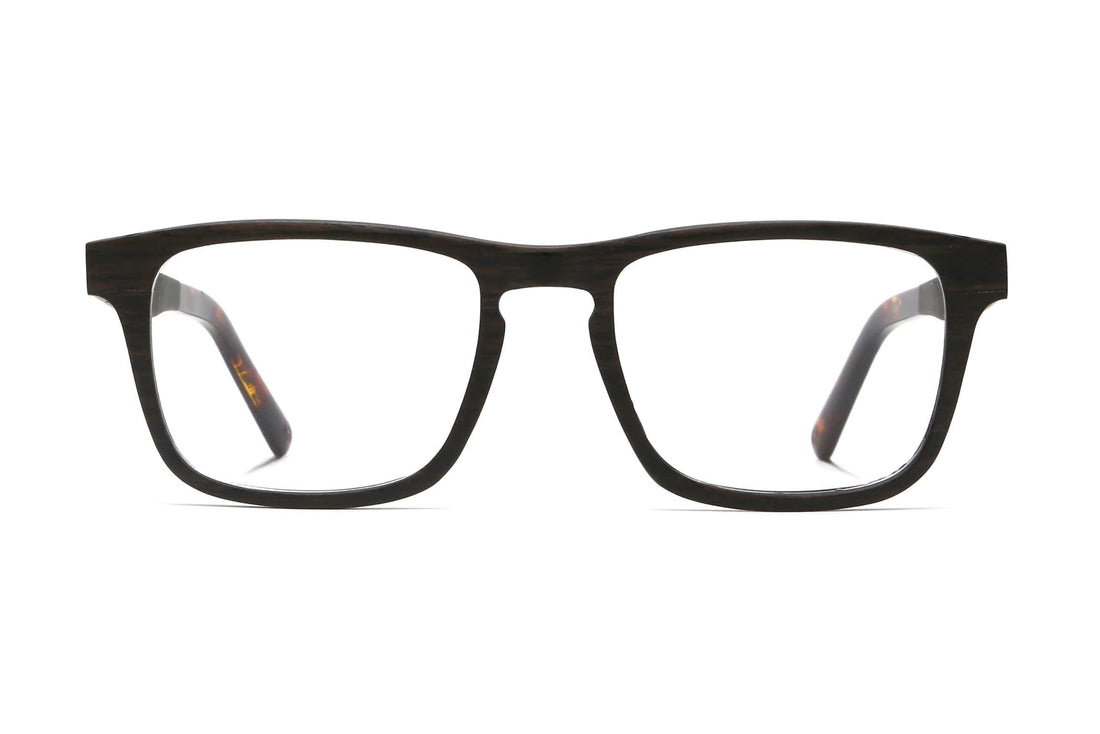
Wooden Frames — The Most Naturally Hypoallergenic Option
Real wood is one of the most skin-friendly frame materials available. It contains no nickel, no synthetic plasticizers, no petroleum derivatives, and no latex. Properly finished wooden frames touch your skin with a smooth, naturally inert surface that simply doesn't trigger the chain of reactions caused by metal or plastic.
The material's skin-safety also depends on what it's paired with. At Kraywoods, wooden frames are hand-finished with non-toxic, skin-safe sealants that protect the wood without introducing synthetic irritants — so the contact points along your nose and temples stay as close to a natural surface as possible.
If you've reacted to both metal and plastic frames before — or if you have confirmed sensitivities to both nickel and synthetic plasticizers — wood is often the only material that sidesteps both triggers entirely. It's the starting point most dermatologists and opticians recommend for wearers who haven't been able to narrow down the specific allergen.
Here are some of our most-loved hypoallergenic wooden frames:
Bio-Acetate Frames — Plant-Based and Skin-Safe
Bio-acetate is the modern alternative to traditional acetate — a plant-based material made primarily from cotton and wood pulp rather than petroleum. That difference in origin matters for your skin: bio-acetate doesn't contain the same synthetic plasticizers and stabilizers found in conventional acetate, which removes one of the most common triggers for glasses-related contact dermatitis.
Bio-acetate is also more flexible and breathable than standard plastic, which means less heat buildup and less friction during long wear. The material warms gradually to body temperature rather than staying rigid, reducing the sustained pressure at contact points that compounds irritation over a full day. It's also one of the more sustainably sourced frame materials available — if that matters to you, our guide to eco-friendly glasses covers that angle in more depth.
If you've had reactions to conventional acetate but want the full range of color and pattern that metal or wood can't offer — rich tortoise, crystal clear, deep matte tones — bio-acetate frames are where most wearers in that situation land. They give you the aesthetic flexibility of acetate ones without the irritation profile.
Explore some of our most popular bio-acetate styles:
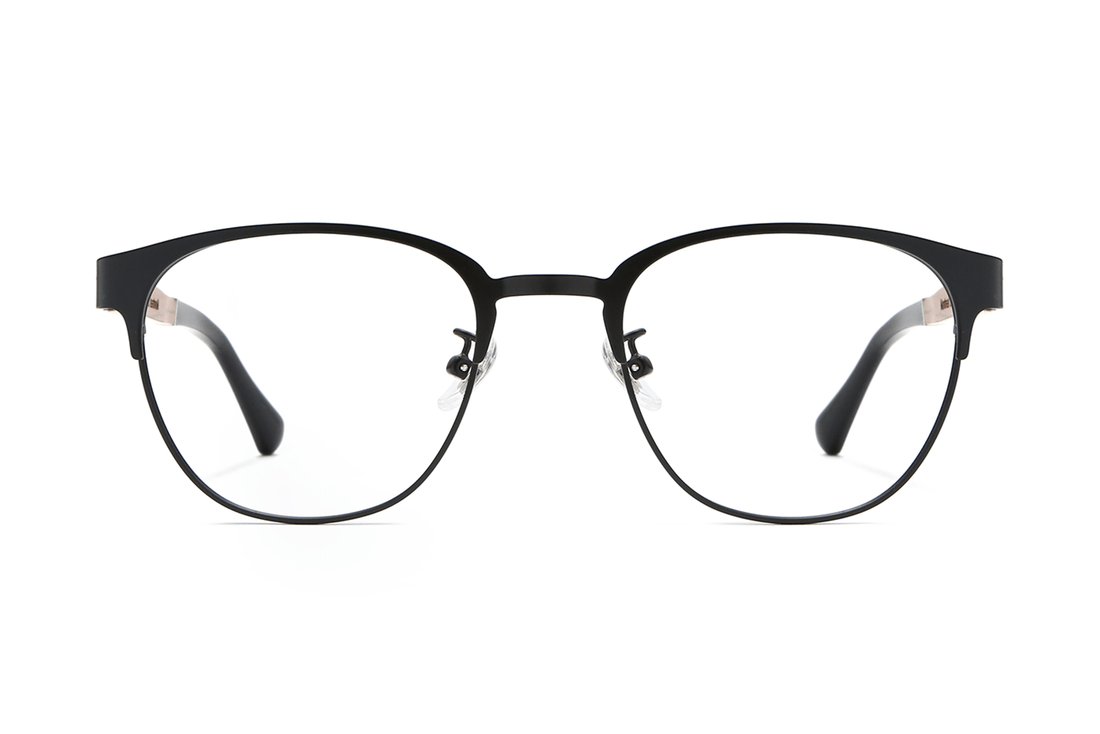
Stainless Steel Frames With Wooden Temples — Metal Done Right
If you want a metal frame but have had reactions to metal in the past, the issue was almost certainly nickel — not metal as a category. Stainless steel doesn't release nickel ions onto the skin the way cheaper alloys do, which is what makes it one of the safest metal options available for sensitive wearers.
Kraywoods' metal frames pair stainless steel fronts with natural wooden temples — a combination built specifically for this situation. The stainless steel handles the structural front of the frame, while the wooden temples rest against the warmest, most reactive contact points along your head. The result is a clean, minimalist frame that delivers the look of metal eyewear while removing the primary trigger that caused the reaction in the first place.
If you've been told you have a nickel allergy but aren't willing to give up the aesthetic of a metal frame, this combination is the direct answer — it was designed for exactly that constraint.
Take a look at our stainless steel frames with wooden temples:
A Note on Titanium and Other 'Hypoallergenic' Metals
Titanium is one of the most biocompatible metals available and is often marketed as hypoallergenic — and that claim holds up. It's a legitimate option for wearers with metal sensitivities. That said, it typically comes at a higher price point, can feel cold against the skin during wear, and doesn't carry the natural warmth that wood and bio-acetate provide throughout the day.
For wearers who want both skin safety and the tactile quality of natural materials, stainless steel paired with wooden temples covers the same allergen-free ground while feeling noticeably different at the contact points where it matters most.
How to Tell If You're Having a Reaction to Your Glasses
An allergic reaction to glasses typically develops gradually rather than appearing immediately — which is one reason it gets misattributed to dryness, seasonal skin changes, or an unrelated product. The tell is location: symptoms appear specifically where the frame contacts your skin.
Common signs to look for:
-
Red, itchy, or inflamed patches on the nose bridge, behind the ears, or along the temples
-
Small bumps, rashes, or hives that map exactly to where the frame sits
-
Dry, flaky, or peeling skin at the contact points
-
Persistent redness that doesn't fade after removing the glasses
-
Sores or breaks in the skin — a sign the reaction has progressed beyond surface irritation
Symptoms that consistently worsen with wear and improve when you stop are a strong signal that the frame is the cause. The American Academy of Dermatology recommends patch testing to identify the specific allergen — useful if you've reacted to multiple frames and can't isolate the trigger. In most cases, switching to a verified hypoallergenic material resolves the issue completely.
Who Benefits Most From Hypoallergenic Glasses?
Hypoallergenic frames matter most for wearers whose skin gives them little margin for error:
-
People with diagnosed nickel allergies — who need to actively avoid the metal frames where nickel is most concentrated: hinges, nose pads, and temple cores.
-
Anyone with eczema, rosacea, or a reactive skin baseline — where even low-level irritants can trigger flare-ups that go far beyond where the frame sits.
-
Wearers who develop reactions after months of use — a pattern that typically indicates sensitization building over time, most often to nickel or acetate plasticizers.
-
People with multiple contact allergies — who benefit most from wood or bio-acetate because those materials sidestep the broadest range of common triggers at once, rather than addressing a single allergen.
-
Children with sensitive skin — whose skin responds more acutely to sustained contact with allergenic materials than adult skin typically does.
How to Choose the Right Hypoallergenic Glasses
Use this framework to narrow your options before you commit to a pair:
-
Identify what reacted before. If the reaction came from a metal frame, nickel is the primary suspect. If it came from a plastic frame, plasticizers in the acetate are more likely. That distinction guides which material to move toward.
-
Prioritize natural materials as a starting point. Wood and bio-acetate avoid the broadest range of common allergens simultaneously, which makes them the safer default if you haven't been able to pinpoint the specific trigger.
-
Check the contact points specifically. A frame can be made from a skin-safe material but still use allergenic nose pads or temple tips. Verify that the components touching your skin directly — not just the front of the frame — are also safe.
-
Confirm the finish. Quality frames use non-toxic sealants. Avoid frames with flaking paint, peeling coatings, or a strong chemical smell — signs of a finish that may be more irritating than the material underneath.
-
Consider professional input. If you've reacted to several different frames without a clear pattern, a dermatologist can run patch tests to identify the allergen precisely — removing the guesswork from your next purchase.
If you're not sure where to start, browse our full range of prescription glasses — every Kraywoods frame is designed with skin-safe materials and craftsmanship in mind, and our lenses are made in-house at our Canadian optical lab.
Key Takeaways
-
The most reliably hypoallergenic frame materials are wood, bio-acetate, and stainless steel — each works by avoiding the specific allergens most responsible for glasses-related skin reactions.
-
Nickel is the single most common trigger in metal frames; it can cause sensitization that builds over months, which explains reactions that seem to appear suddenly after long-term wear.
-
Bio-acetate removes the plasticizers and synthetic stabilizers that make conventional acetate problematic — giving you full color and design flexibility without the irritation risk.
-
Stainless steel paired with wooden temples covers both the metal aesthetic and the skin-safety requirement — the wooden temples sit at the highest-contact points along the sides of your head.
-
The finish matters as much as the base material: a poorly sealed or synthetic-coated frame can irritate skin regardless of what it's made from.
-
Reactions that map precisely to where the frame contacts your skin — and improve when you stop wearing the glasses — are the clearest signal that material, not fit, is the problem.
The Bottom Line
If your glasses are irritating your skin, the answer isn't to suffer through it — it's to switch to materials that don't cause the problem in the first place. Wood, bio-acetate, and stainless steel are the most reliably hypoallergenic frame materials available, and together they cover almost every style preference and prescription need.
At Kraywoods, skin-safe materials are part of how every frame is designed — from our signature wooden styles to our bio-acetate collection and our stainless-steel-with-wood hybrids. Each pair is built to be worn all day, by every kind of skin. Browse the full eyeglasses collection to find your ideal frame.
Frequently Asked Questions
What glasses material is hypoallergenic?
Wood, bio-acetate, and stainless steel are the most reliably hypoallergenic frame materials. Wood avoids nickel, synthetic plasticizers, and latex entirely. Bio-acetate removes the petroleum-derived compounds that make conventional acetate irritating. Stainless steel is safe for most nickel-sensitive wearers because it doesn't release nickel ions onto skin.
Can you be allergic to your glasses?
Yes. Allergic reactions to glasses are most commonly caused by nickel in metal frames or plasticizers in conventional acetate. Reactions typically appear as redness, itching, or a rash at the contact points — nose bridge, temples, and behind the ears — and usually worsen with continued wear.
What does an allergic reaction to glasses look like?
Common signs include red or itchy patches precisely where the frame sits on your skin, small bumps or hives at the nose bridge or temples, dry or flaking skin at the contact points, and redness that persists after removing the glasses. Symptoms that improve when you stop wearing the frames confirm the frame is the cause.
How do I stop my glasses from irritating my skin?
Switch to a verified hypoallergenic frame material — wood, bio-acetate, or stainless steel. Confirm that the nose pads and temple tips are also made from skin-safe materials, since those are the highest-contact points. If the irritation is mild, temporarily replacing nose pads with silicone alternatives can help, but switching frame materials is the more lasting fix.
Why am I suddenly allergic to my glasses?
Sensitization is cumulative — your immune system can tolerate repeated exposure to an allergen for months or years before crossing a reaction threshold. So the frames haven't changed; your tolerance has. Switching to a material your skin hasn't been sensitized to — wood, bio-acetate, or stainless steel — typically stops the reaction.
Are there hypoallergenic reading glasses?
Yes — frame material and lens type are completely independent. Reading lenses can be made in wood, bio-acetate, or stainless steel frames without any compromise to the hypoallergenic properties. Browse Kraywoods' reading glasses collection for skin-safe options across all lens strengths.
 Rayhan El-Asmar
Hypoallergenic Glasses: Best Frame Materials for Sensitive Skin
Shop by category